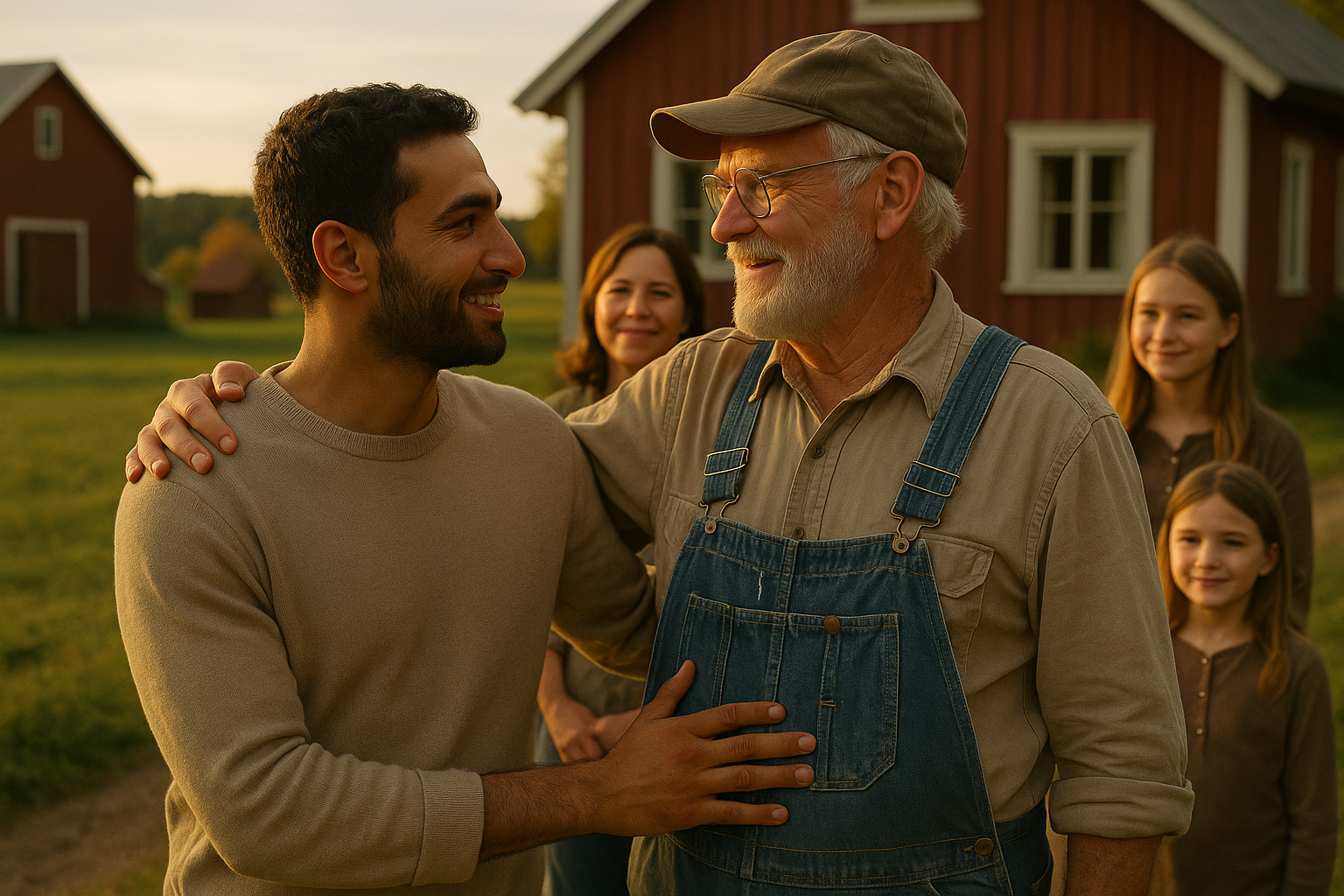

Building Trust and Community
By Karl Balloch
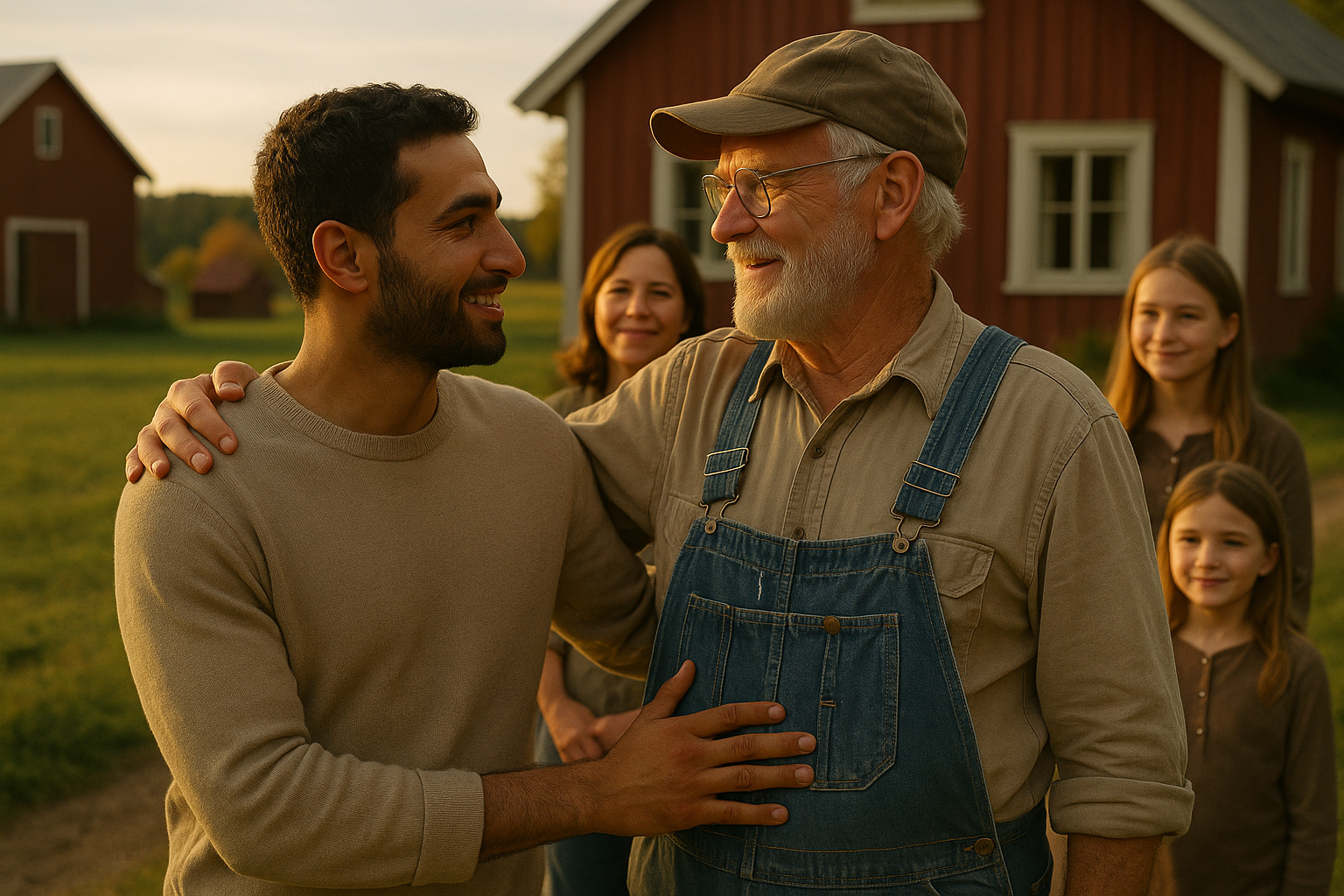
The Power of Compassion: How One Farmer Changed a Life
A story about hardship, kindness—and the power of gratitude.
Here’s a short story for you.
Once upon a time, a young man named Arbaz was living a prosperous life in his native country. Suddenly, an old civil war broke out across the nation, and everyone became concerned for their safety and future.
War and severe hardships forced him, along with millions of others, to flee his homeland. Overnight, Arbaz became a refugee.
He spent many difficult days walking through deserts, forests, and across seas in search of a peaceful place where he could rebuild his life. He was among the few fortunate people who managed to enter a safe and stable country.
While many of his companions continued their journey toward larger cities, Arbaz stopped at the doorstep of a farmhouse located within the borders of his new country.
The following morning, he met the head of the household, Ilpo, a humble and compassionate farmer. Seeing Arbaz’s exhausted and broken condition, Ilpo was filled with sympathy and concern.
Unable to speak the local language, Arbaz tried to explain his struggles through gestures and sign language. To better understand him, Ilpo downloaded a translation application and listened carefully to his story.
After learning about Arbaz’s hardships, Ilpo responded emotionally:
“You are welcome here. Welcome to our home. Rest, eat, and be safe here.”
Ilpo explained that their community was built upon mutual care, trust, respect, and shared human values.
Without hesitation, he discussed the matter with his family and received their support to offer Arbaz a place to stay, food to eat, and assistance for his daily needs.
As time passed, Arbaz became part of the household rather than a burden upon it. Gradually, he rebuilt his life.
Over the years, he learned the local language, developed practical farming skills, and gained valuable knowledge from Ilpo. Eventually, he became independent, self-sufficient, and free to shape his own future.
Yet despite his progress, Arbaz faced an important struggle within himself. A difficult question lingered in his heart.
Would he stand by the people who had welcomed, protected, and supported him?
Not only by accepting their kindness, but by respecting the values that made such kindness possible?
Or would he choose to criticize their lifestyle, reject their social customs, and take from them without giving anything in return?
In the end, Arbaz listened to his heart.
He stood beside the farmer. He defended the home that had sheltered him and spoke positively about the country that had given him a second chance.
He respected the sentiments of his host nation and supported the international principles and policies that guided it.
Arbaz chose to give back, not because anyone forced him to, but because he understood a simple truth: When someone saves you, you do not walk away and forget. You walk forward with gratitude, responsibility, and loyalty.
Release what no longer serves you, align your thoughts with new possibilities, and walk into your transformed self