
Would She Have Said the Same to Me?
Not every correction is discrimination, and not every silence is kindness.
Notes from a LIDL parking lot.
Karl Balloch
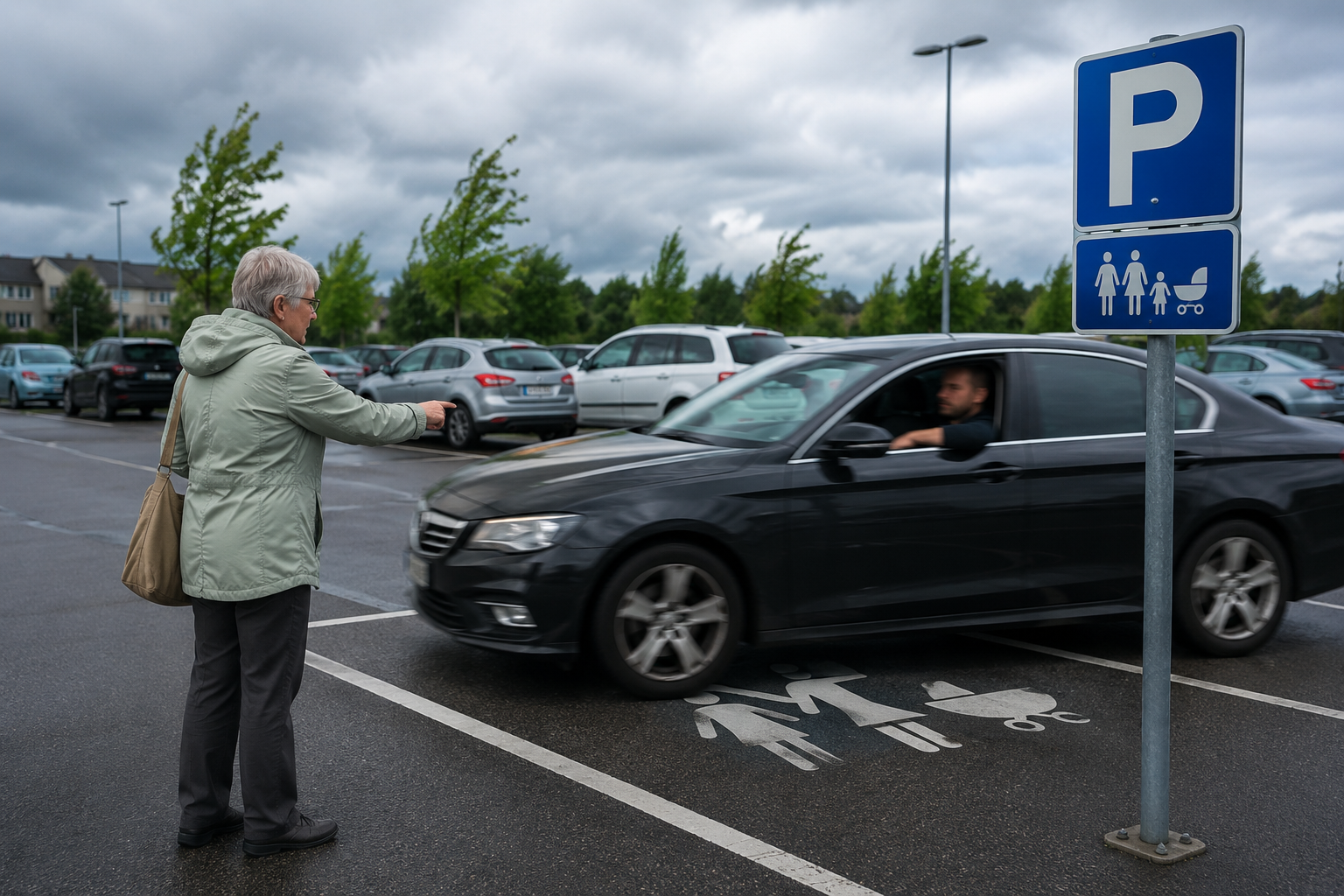
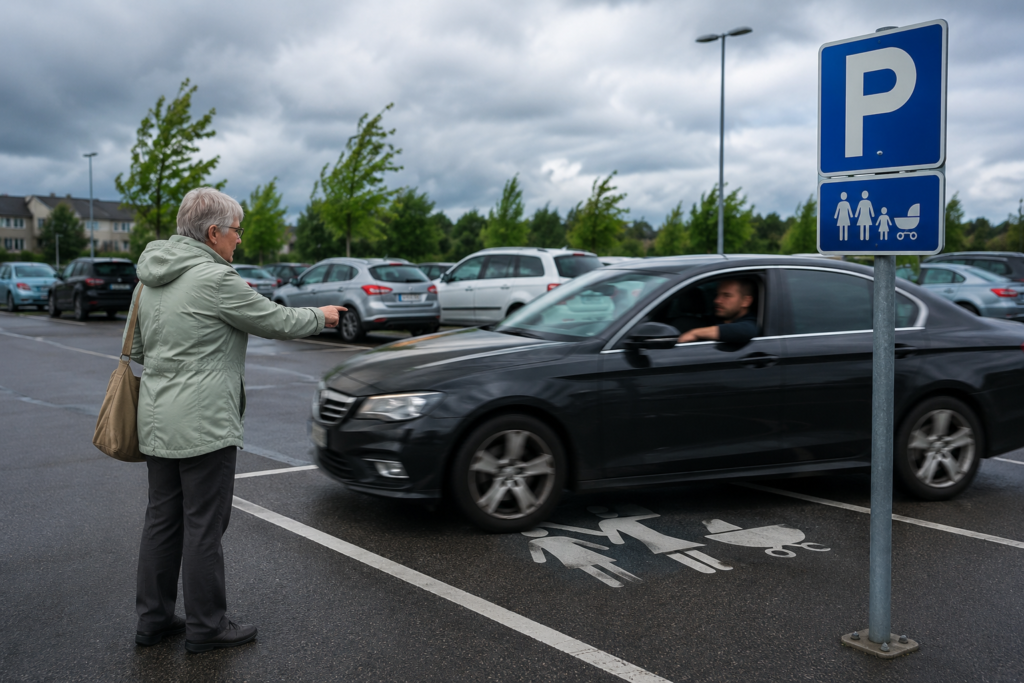
Recently I was at a LIDL parking lot in Finland one afternoon. A light breeze was blowing under a cloudy sky. I was at a distance from the main entrance when I noticed a man, mid-thirties, apparently Finnish, parked his car in a spot reserved for families with kids. He was alone. A Finnish woman, probably in her sixties, wearing one of those practical rain jackets everyone here seems to wear, walked up to the man and pointed towards his car, “ You are not supposed to park here. This spot is reserved for families.” Her tone was polite, and she was speaking with a smile. It was the kind of politeness that’s trying really hard not to offend. The man did not look at her. Just walked off fast. Ignored her completely.
And I thought: Very Good. She saw something unfair and said something to correct it. That takes guts, actually. Most people don’t bother and think it is an interference.
But then suddenly a thought sparked in my mind. This is the part that messed with me. I had this other thought. The negative one. The one I don’t like to admit.
Would she have reacted the same way if the man looked African?
If he had my skin color, my accent, my appearance?
I don’t know.How would she have reacted?
And honestly? That uncertainty carries the whole problem.
Here’s what worsens it. She might not have spoken to the man if he was not a Finn. Not because she does not care if a foreigner makes a mistake.
But because she might be scared. Scared that if she corrected someone like me, I’d call her biased. Or she’d worry that I’d interpret her correction as prejudice.. And I walk around thinking, See? They don’t want me here. They’re ignoring their people but pinching me on purpose.
Having these imaginary thoughts, a movie was playing in my head.
There’s this experiment conducted by a psychologist named Robert Kleck. Maybe you’ve heard of it.
In this study, done with Angelo Strenta at Dartmouth in 1980, a makeup artist painted a fake scar on the face of each volunteer. The scar looked unbelievably real. Each volunteer saw it in a mirror. Then, just before the volunteer went to talk with a stranger, the artist said he needed to add a final touch so the scar would not crack. In that moment, he secretly wiped the scar off completely, without telling them.
So these people went into the conversation believing that they looked disfigured.
Each conversation lasted only about six minutes. But afterwards, almost all of them reported that the stranger had treated them badly. They said the stranger was tense, kept staring at their cheek, and spoke to them in a superior way. Some felt the conversation was cut short because of the scar on their face.
But in reality there was no scar on their cheeks. None. It had been wiped off just before they walked out.
The scar was in their heads the whole time. The real-looking scar was in their thoughts. They just believed that they had scars.
That is the whole experiment. One short talk was enough for an imaginary scar to rewrite reality. And sadly, it is still continuing in our social and community life. Everything else is just us explaining it to ourselves.
So here’s the thing I keep coming back to share with you: we immigrants, refugees, migrants, are living inside that experiment every single day.
We see the news headlines about Immigrants, certain people groups. We hear the politicians speaking about problems caused by immigrants. We scroll past the comments on social media. And these things are real and really happening. I’m not saying they do not exist. But they draw these invisible scars on us. And we start interpreting everything happening and interaction through the lens of these scars.
Someone corrects you to sort out your wastes? Discrimination.
Someone asks you to turn your phone speaker off in the bus? They don’t want you here.
Do not smoke on the balcony? It must be because I am a foreigner.
The result is that Finns start to think this immigrant never learns. The resentment grows quietly, and the correction finally arrives as an official complaint letter instead of a friendly word. That is the real and bigger cost. The immigrant who calls every correction discrimination trains his neighbours to stop correcting him. It is a big loss.
Yes, some discrimination is real. Sometimes you do not get the job because of your name, your background, your religion. Researchers have tested this by sending the same CV with different names. It is a bitter truth.
I cannot control what a stranger assumes about me before we meet.
But I can control what he learns about me after ten minutes with me.
Coming back to the corrections,
what if some of those corrections are actually helpful?
What if the woman at LIDL was just doing her civic duty?
What if the person in the queue who says, “Do not stand so close,” is actually trying to include you, not exclude you?
I know. I know that sounds naive. And maybe I’m wrong about this. Some days I’m convinced I am.
But think about it.
Who are your close friends? Be honest.
If your social circle is only people from your village, your language, your culture, that’s fine. That’s natural. I have those friends too. But is it only them?
And where do you get your hair cut? Be honest again.
Do you search for the barber from home country? The restaurant that tastes like childhood? I do too. There’s nothing wrong with that. But ask yourself: do you feel comfortable walking into any barbershop? Any café? Any space at all? Or only to look for the places run by the individuals from your race, religion and region?
If the answer is yes, here’s the brutal truth: you’re not being integrated. You’re keeping yourself out.
The Finnish social life style didn’t build that wall. You did it by keeping yourself in a particular circle.
I know that sounds harsh.
Let me be clear about one thing. Discrimination is real at the level of society. Reports of racism happen more often than before. You have probably experienced them yourself. We shouldn’t pretend otherwise. That’s not what I’m saying.
But here’s what I am saying: not every closed door is locked because of who you are. Sometimes a door just needs more than one knock. And sometimes you didn’t even try the handle.
So what happens if we stop believing in those invisible scars?
What if we befriend people who don’t look like us, pray like us, eat like us?
What if we expand our circles? Our interactions, our WhatsApp groups, the activities we join?
If you still struggle with this, I understand. Some mornings you wake up and the old stories are already playing in your head. They don’t want me here. You tell yourself: I will not attend that program because my Finnish is not good enough. Question that thought.
Then tell yourself: I will go, because going is how my Finnish gets better.
When I act like the scars aren’t on my face, even when I’m terrified, something moves forward. I respond differently. The world feels less hostile. It’s not magic. It’s not pretending. It’s just refusing to be the one holding the pen that draws those scars.
Maybe that woman at LIDL would have corrected me too. And maybe that correction would have been the most Finnish welcome I could receive.
Because the scars exist only in the mind.
And the mind is the place that only you can correct.
So check where you have parked your thoughts. You might be in the wrong spot.
Welcoming correction keeps everything in its proper place.